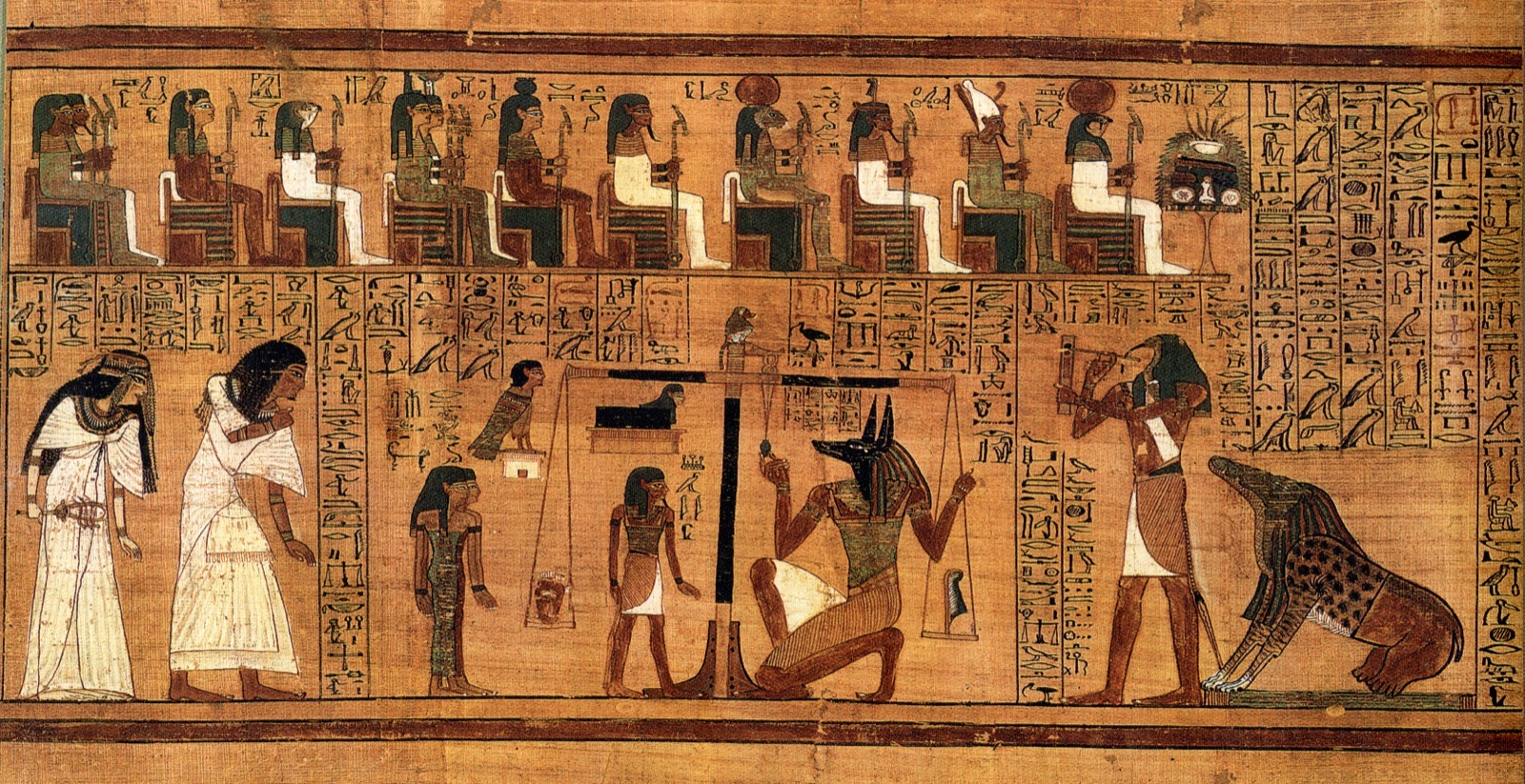
This tradition has no apocalypse. Every other entry in the Sealed Library asks the same question, in different languages, across different millennia: How will the world end? The Yoruba-Kemetic tradition does not ask this. It asks: How does the individual pass through death and return? The Weighing of the Heart is not a cosmic reckoning. It is a personal one. Ori is not species-level fate. It is the inner head—your destiny, chosen before birth, forgotten at the threshold of life, recovered through divination and right action.
This is the Sealed Library’s counter-tradition—the one that replaces terminal eschatology with perpetual moral accounting. Where Judeo-Christian apocalyptic offers a final battle, where Zoroastrian Frashokereti offers cosmic renovation, where the Five Suns offer cyclical destruction, this tradition offers something more unnerving: judgment that never ends. Not once, at the end of time. Every time. For every soul.
Ma’at is the operating principle of this dashboard. The Ma’at Protocol—agency inversion test, amplification chain tracing, civilian asymmetry audit, deep time perspective—is named for the Egyptian concept of connective justice. The tradition it comes from is finally represented here.
ORIGINS: THE PYRAMID TEXTS AND THE OGDOAD
The Pyramid Texts (c. 2400 BCE) are the oldest religious corpus in the world. They were carved into the limestone walls of the pyramid of Unas at Saqqara—older than the Vedas, older than the Torah, older than every other text in this Library. James P. Allen’s 2005 translation for the Society of Biblical Literature runs to 470 pages of utterances, each designed to ensure the king’s passage through the afterlife. They are not theology in the systematic sense. They are operational: spells, declarations, maps of the sky.1
The Ogdoad of Hermopolis—eight primordial deities arranged in four male-female pairs—encodes the pre-creation state as structured chaos. Kek and Keket: darkness. Nun and Nunet: water. Heh and Hehet: infinity. Amun and Amunet: hiddenness. This is not the void. It is the ocean before the first island. The Hermopolitan cosmogony holds that the Ogdoad generated the primeval mound (benben) from which the sun god emerged. Erik Hornung’s Conceptions of God in Ancient Egypt (1982) argues that the Egyptians did not resolve contradictions between cosmogonies—they held them in parallel, each illuminating a different facet of what preceded existence.2
“ḥtp-ḏī-nsw Wsīr”—“An offering which the king gives to Osiris.”
— Pyramid Texts, Utterance 213. Pyramid of Unas, Saqqara, c. 2400 BCE.
MA’AT AND THE WEIGHING OF THE HEART
In Chapter 125 of the Book of the Dead—properly the Book of Coming Forth by Day (r n prt m hrw)—the deceased enters the Hall of Two Truths. Anubis, jackal-headed, places the heart on one pan of the scale. On the other: the feather of Ma’at. Thoth, ibis-headed, records the result. Ammit—part crocodile, part lion, part hippopotamus—waits beneath. If the heart is heavier than the feather, she devours it. The soul ceases to exist. Not hell. Not punishment. Annihilation.3
This is not a cosmic judgment. It is not the end of the world. It is the perpetual moral accounting of each individual soul. Ma’at (mṥʔt) means truth, justice, and cosmic order simultaneously—it cannot be reduced to any one of these. Jan Assmann’s foundational treatment, Ma’at: Gerechtigkeit und Unsterblichkeit im Alten Ägypten (1990), calls it “connective justice”: the principle that holds society, cosmos, and afterlife together. It is not a goddess in the Olympian sense. It is the condition under which existence is possible.4
The Negative Confessions—the declarations the deceased makes before 42 divine assessors—are not prayers for mercy. They are assertions of fact: “I have not done iniquity. I have not robbed with violence. I have not done violence to any man. I have not committed theft. I have not slain man or woman. I have not made light the bushel.” Rune Nyord (2019) argues that the Weighing is not a trial but a calibration—the heart must be exactly in balance with Ma’at, neither heavier nor lighter.5
This dashboard’s Ma’at Protocol—agency inversion test, amplification chain tracing, civilian asymmetry audit—is named for this tradition. The feather on the scale is the same feather. It is not a metaphor.
“jw jb=j n mṥʔt”—“My heart belongs to Ma’at.”
— Book of the Dead, Ch. 125. Negative Confessions. Papyrus of Ani, c. 1250 BCE.
YORUBA IFÁ AND THE ORISHAS
Ifá is one of the most complex oral knowledge systems on earth. Its 256 odù (chapters)—generated by the combinatorial logic of eight binary marks cast with palm nuts (ikin) or a divination chain (òpèlè)—each contain hundreds of verses (esè), stories, and prescriptions. Wande Abimbola spent decades documenting the corpus. His Ifá: An Exposition of the Ifá Literary Corpus (1976) remains the foundational text. UNESCO inscribed Ifá as an Intangible Cultural Heritage in 2005—one of the first proclamations under the convention.6
The orishas are not gods in the Western sense but mediating principles—aspects of the divine that interact with the human world through specific domains. Ogun: iron, war, technology, the road cleared through the forest. Yemoja: the ocean, motherhood, the waters that sustain. Shango: thunder, justice, the fire that purifies. Eshu: the crossroads, communication, the trickster who ensures messages reach their destination and also ensures that careless messages misfire. E. Bolaji Idowu’s Olódùmarè: God in Yoruba Belief (1962) established the theological framework: a supreme deity (Olódùmarè) who delegates action to the orishas.7
Aṣẹ (a-sheh)—the cosmic power to make things happen, to activate reality—is the Yoruba parallel to Ma’at. It is not personal willpower. It is an impersonal ordering force that precedes and sustains the personal gods. Babatunde Lawal’s work on Ori—the inner head, the personal destiny chosen before birth—demonstrates that Yoruba eschatology is radically individual: your fate is not determined by the end of the world but by your alignment with the ori you selected and then forgot.8
“Ọ̀rúnmìlà ló d’Ifá, ó sì ní kí wọ́n ó máa bọì”—“Orunmila established Ifá and commanded that people perform divination.”
— Odù Ogbè Méjì. Abimbola (1976).
THE AṢẸ-MA’AT-ASHA CONVERGENCE
Three independent traditions—Yoruba, Egyptian, Zoroastrian—arriving at the same structural concept: a cosmic ordering force that is simultaneously moral, metaphysical, and practical. Ma’at (Egyptian): truth, justice, cosmic order—the feather against the heart. Aṣẹ (Yoruba): the power to activate reality, make things happen. Asha (Avestan: aṣ̌a): truth, righteousness, cosmic order. These are not loan-words. They are not inherited from a common ancestor. They are independent convergences on the same insight: that the cosmos has a moral structure that is not optional.
Extend the pattern further: Ṛta (Vedic): cosmic regularity, the order of seasons, the course of the sun—the concept that preceded dharma in Indian thought. Dao (Chinese): the Way, the natural course, the principle that cannot be named. Lloyd Graham’s 93-page comparative survey (“Counterparts of Ancient Egyptian Maat in Other Cultures,” Academia.edu, 2023) concludes: “No single paradigm is perfectly analogous to maat.”9 He is right. And yet the convergence across five continents is the datum—not the divergences. Five civilizations, independently, concluded that justice is not a human invention but a cosmological law.
Maulana Karenga’s Maat, the Moral Ideal in Ancient Egypt (2004) takes the argument further: Ma’at is not merely descriptive but operative. It is the principle by which a society can measure itself—not against an abstract standard but against the structure of reality. This is why this dashboard uses it. The Ma’at Protocol does not ask whether a claim is popular or institutional. It asks whether the claim survives the inversion test, the provenance audit, the asymmetry check. The feather does not care who placed the heart on the scale.10
“aṣ̌əm vohū vahīštəm astī”—“Asha is the best good.”
— Ashem Vohu prayer. Avestan, c. 1200–900 BCE.
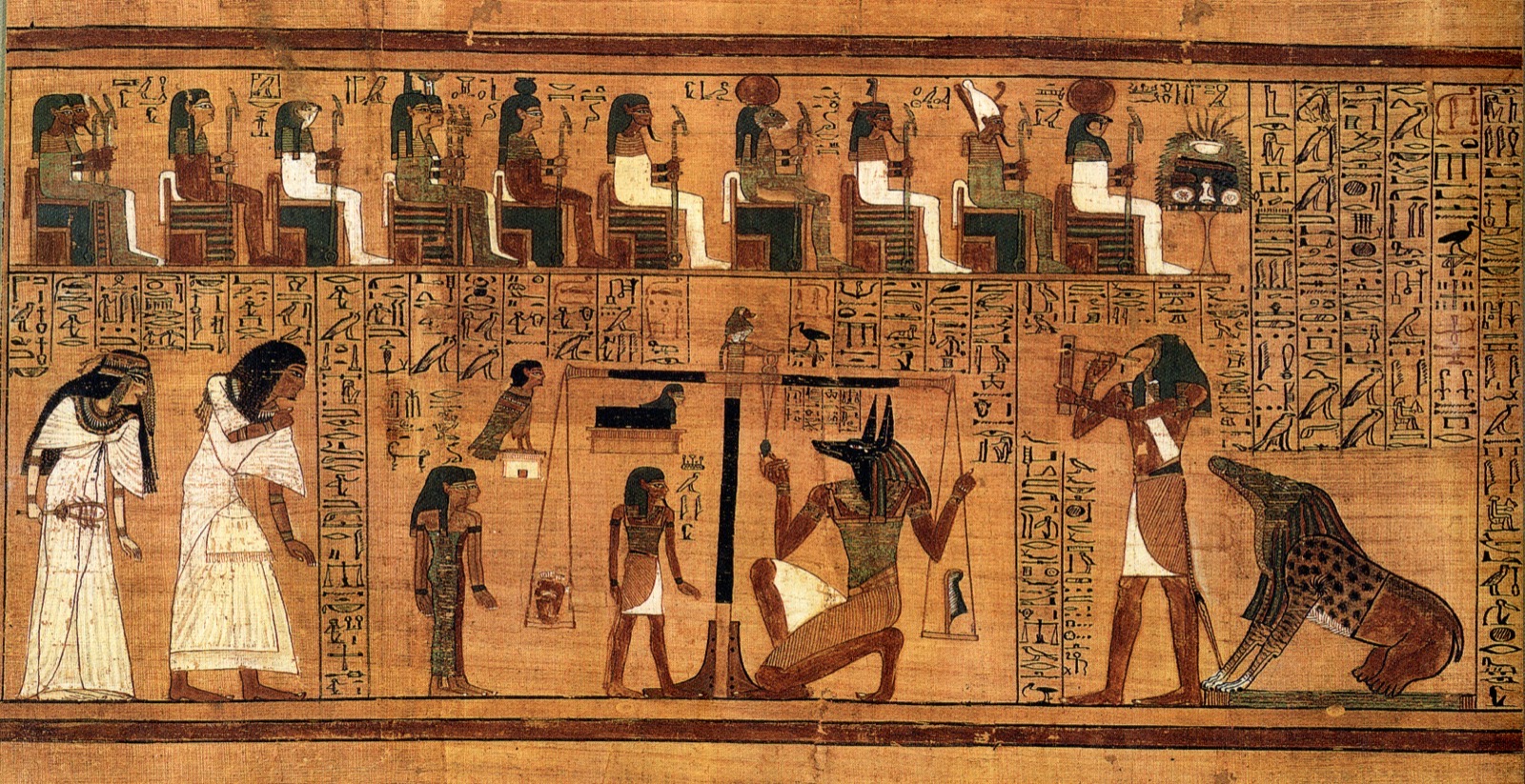
WEIGHING OF THE HEART
Papyrus of Ani, c. 1250 BCE — British Museum EA 10470
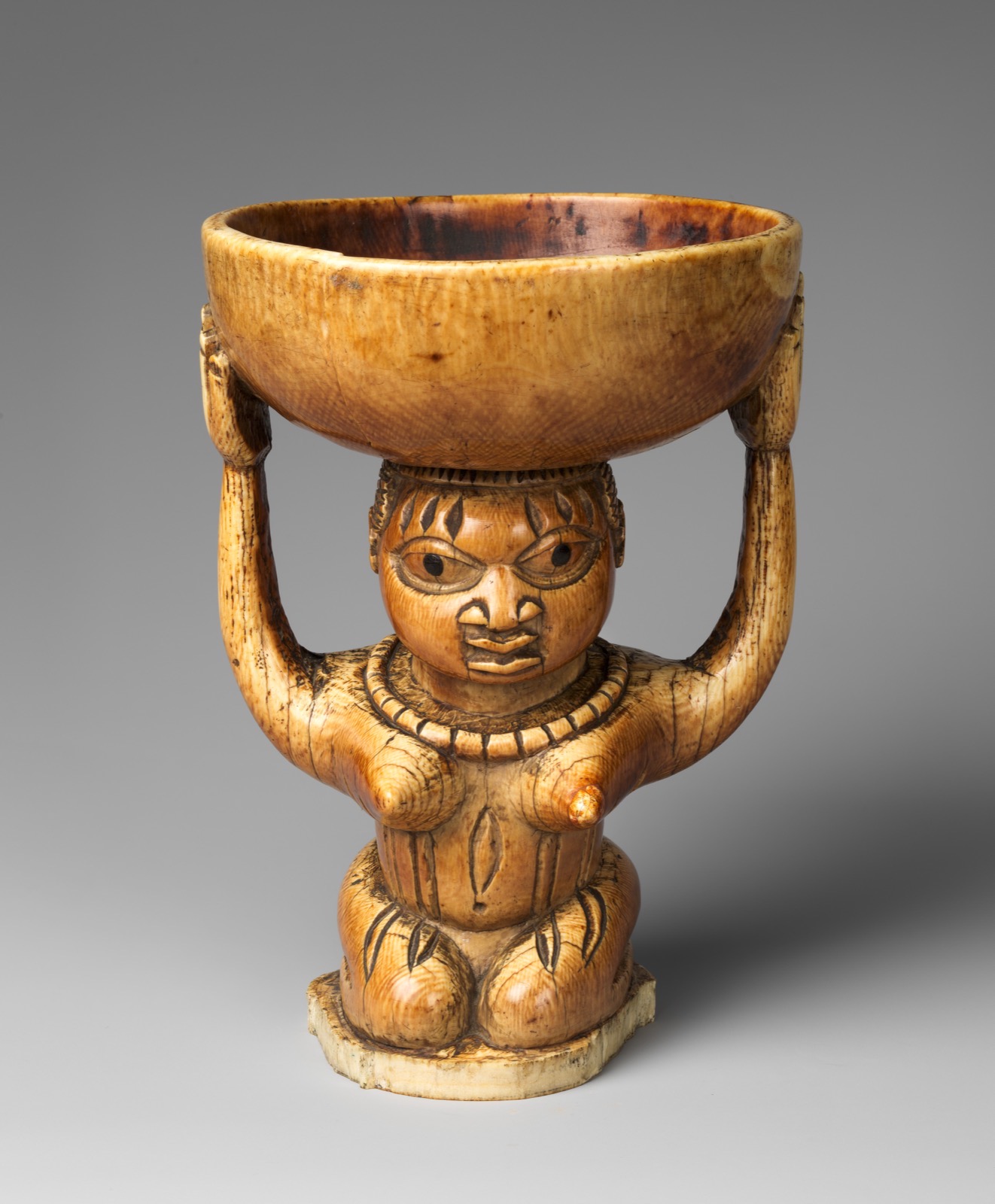
IFÁ DIVINATION BOARD
Opon Ifá — 256 odù, binary logic, UNESCO Intangible Heritage
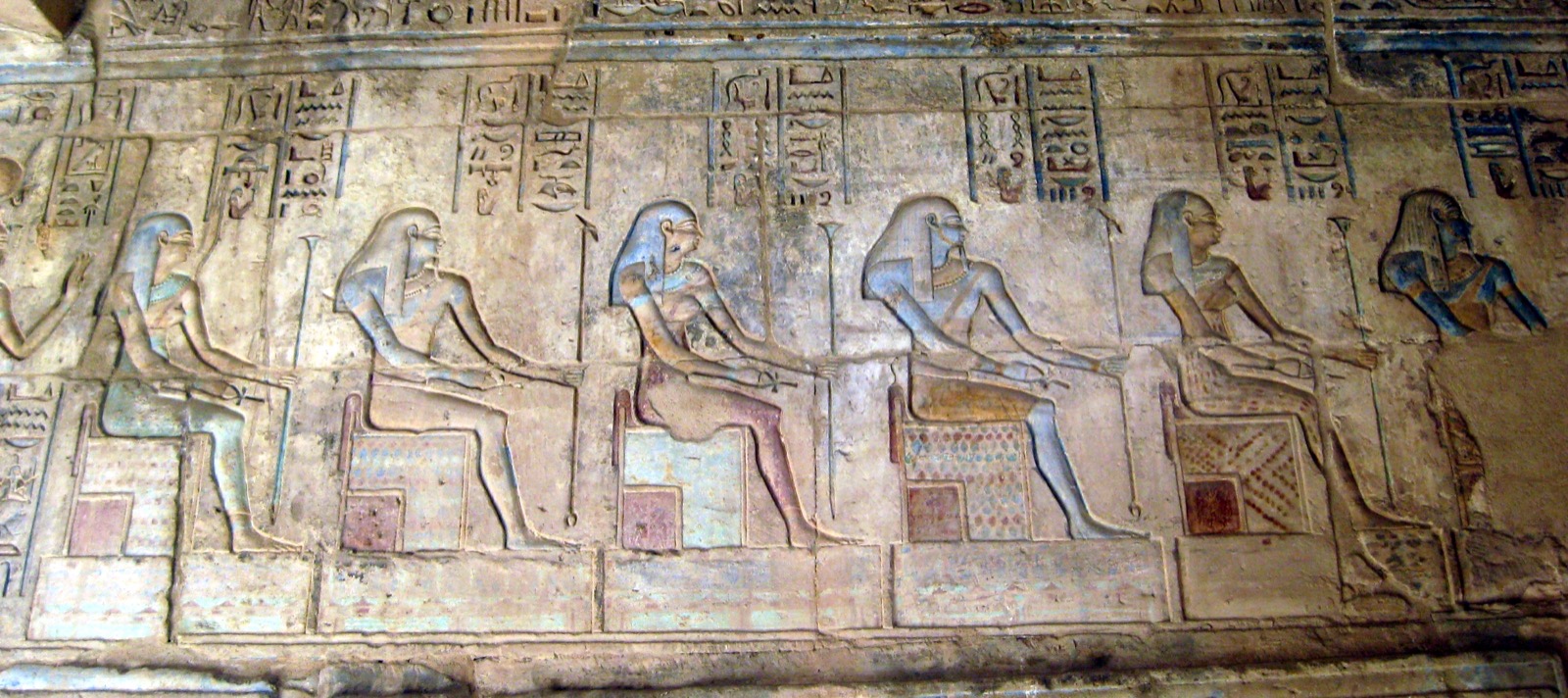
THE OGDOAD
Hermopolis — eight deities of primordial chaos, four pairs
DIASPORA: THE TRADITIONS THAT SURVIVED THE MIDDLE PASSAGE
Candomblé (Brazil). Santería / Regla de Ocha (Cuba). Vodou (Haiti). Over 100 million practitioners of African-derived traditions across the Americas. The conventional narrative frames these as “survivals”—fragments that clung to life despite the catastrophe of enslavement. J. Lorand Matory’s Black Atlantic Religion (2005) argues the opposite: Candomblé was not passive survival but active reconstruction, maintained through 19th-century transatlantic contact between Bahia and Lagos. The tradition was not merely preserved. It was rebuilt, deliberately, across an ocean.11
The 256 odù of Ifá survived the Middle Passage largely intact. This is not accidental. Babalawos—Ifá priests—were specifically targeted for enslavement because of their intellectual authority within Yoruba communities. The knowledge system survived because the knowledge-holders were taken. Robert Farris Thompson’s Flash of the Spirit (1983) documents the aesthetic and theological continuities from Yorubaland to the Americas: the same iconographic vocabulary, the same color associations, the same gestural language appearing in Cuban Santería, Brazilian Candomblé, and Haitian Vodou.12
Vodou is primarily Fon/Ewe-derived, with Yoruba elements. The Lwa (spirits) include Ogou—cognate with Ogun—iron, war, the machete that clears the way. Cheikh Anta Diop’s The African Origin of Civilization (1974) proposed deeper continuities between Kemetic (Ancient Egyptian) and West African traditions, a thesis contested in its details but validated in its structural intuition by Théophile Obenga’s linguistic work documenting phonetic regularities between Ancient Egyptian and modern Yoruba.13
CONTEMPORARY SIGNAL
Egypt controls the Suez Canal—the other great chokepoint. With Houthi attacks rendering the Red Sea effectively non-operational since late 2025 and the Strait of Hormuz under direct threat from the Iran-US war, Africa faces a dual chokepoint crisis. The continent least responsible for the war is the continent most affected by its secondary effects. BizWatch Nigeria (March 2026) reports war risk premiums past $1 million per voyage through the Gulf. African Mirror (March 2026): Botswana’s fuel reserves dropped to nine days. CFR (March 2026): “Africa’s Silence on the Iran War Speaks Volumes.”14
The continent whose cosmological traditions have the longest continuous practice—the Pyramid Texts at 4,400 years, Ifá at the center of a living tradition with over 100 million practitioners—is the continent bearing the heaviest material cost of a war fought under other civilizations’ eschatological justifications. Nnedi Okorafor’s “Africanfuturism” (drawing on Yoruba and Igbo cosmology) represents the recovery of these frameworks not as nostalgia but as counter-narrative: traditions that never required the world to end in order to hold the individual accountable.15
The deepest response this tradition offers to the current crisis is not eschatological at all. It is the Weighing of the Heart, repeated. Not at the end of history. Now. For each decision-maker, each propagandist, each arms dealer, each analyst. The feather of Ma’at does not wait for Judgment Day. It is always on the scale.
“I have not done iniquity. I have not robbed with violence. I have not done violence to any man. I have not committed theft. I have not made light the bushel.The Negative Confessions — Book of the Dead, Ch. 125
SOURCES
- Allen, J.P. The Ancient Egyptian Pyramid Texts (Society of Biblical Literature, 2005). 470 pages of utterances from the pyramid of Unas at Saqqara.
- Hornung, E. Conceptions of God in Ancient Egypt: The One and the Many (Cornell UP, 1982). The Ancient Egyptian Books of the Afterlife (Cornell UP, 1999).
- Faulkner, R.O. The Ancient Egyptian Book of the Dead (British Museum Press, 1985). Ch. 125: the Hall of Two Truths and the Weighing of the Heart.
- Assmann, J. Ma’at: Gerechtigkeit und Unsterblichkeit im Alten Ägypten (C.H. Beck, 1990). Death and Salvation in Ancient Egypt (Cornell UP, 2005).
- Nyord, R. “Weighing the Heart to Judge the Souls.” In Seeing Perfection: Ancient Egyptian Images Beyond Representation (Cambridge UP, 2019).
- Abimbola, W. Ifá: An Exposition of the Ifá Literary Corpus (Oxford Nigeria, 1976). UNESCO Proclamation of Masterpieces of the Oral and Intangible Heritage of Humanity (2005).
- Idowu, E.B. Olódùmarè: God in Yoruba Belief (Longman, 1962). Foundational theology of the orisha system.
- Lawal, B. “Ori: The Significance of the Head in Yoruba Sculpture.” Journal of Anthropological Research 41:1. Ori as personal destiny chosen before incarnation.
- Graham, L. “Counterparts of Ancient Egyptian Maat in Other Cultures.” Academia.edu (2023). 93-page comparative survey across 12 civilizations.
- Karenga, M. Maat, the Moral Ideal in Ancient Egypt: A Study in Classical African Ethics (Routledge, 2004). Ma’at as operative ethical philosophy, not merely descriptive.
- Matory, J.L. Black Atlantic Religion: Tradition, Transnationalism, and Matriarchy in the Afro-Brazilian Candomblé (Princeton UP, 2005).
- Thompson, R.F. Flash of the Spirit: African and Afro-American Art and Philosophy (Random House, 1983). Aesthetic and theological continuities across the Atlantic.
- Diop, C.A. The African Origin of Civilization: Myth or Reality (Lawrence Hill, 1974). Obenga, T. “Ancient Egyptian and Modern Yoruba: Phonetic Regularity.” Ankh 16.
- BizWatch Nigeria, “War Risk Premiums Past $1M/Voyage.” March 2026. African Mirror, “Botswana’s 9-Day Fuel Reserve.” March 2026. CFR, “Africa’s Silence on the Iran War Speaks Volumes.” March 2026.
- Okorafor, N. “Africanfuturism Defined.” Nnedi’s Wahala Zone Blog (2019). Distinguished from Afrofuturism by centering African (not diasporic) perspectives and cosmologies.