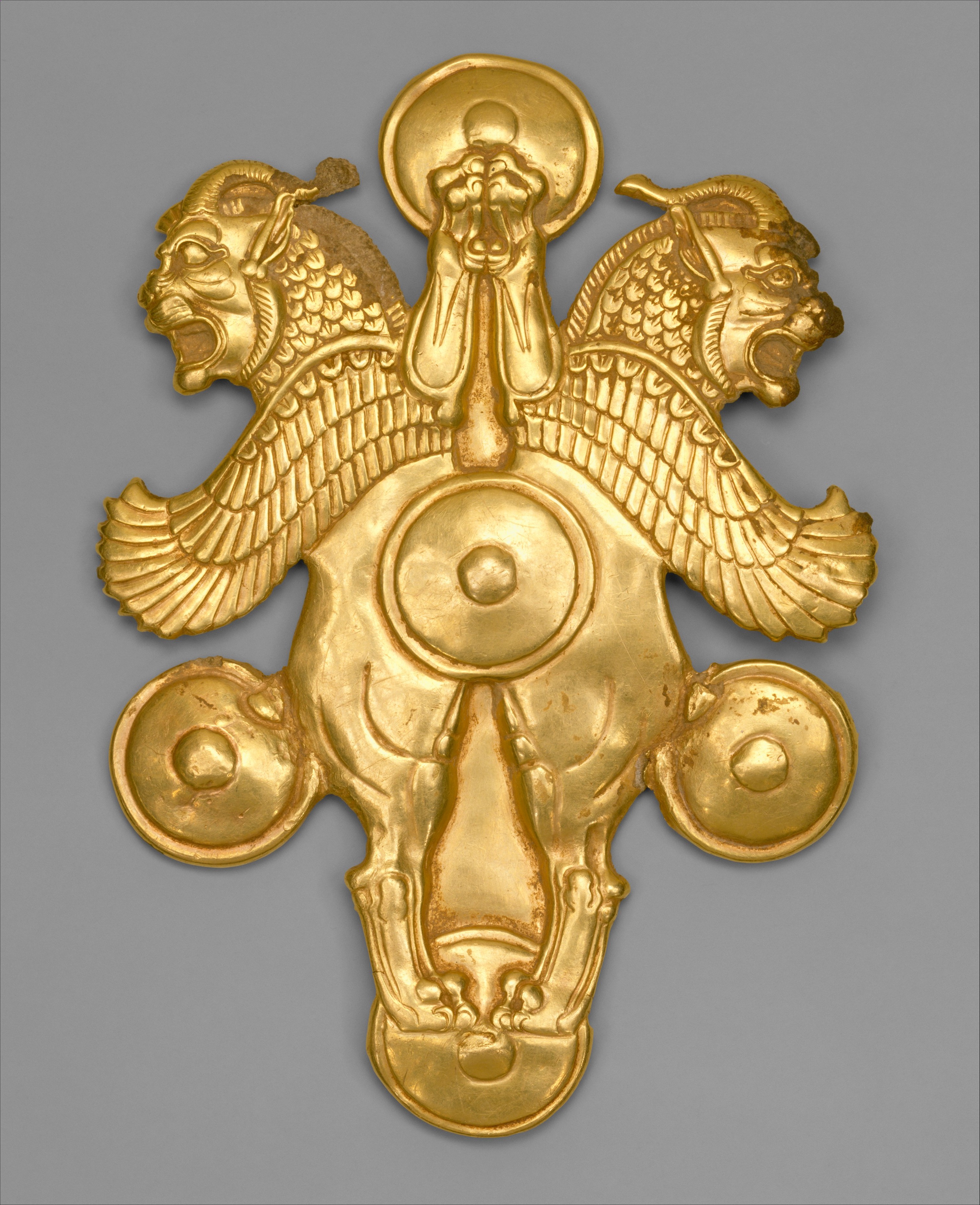
FRASHOKERETI
Yasht 19.89 (the Zamyad Yasht): “He shall make the embodied world immortal, undecaying, unputrefying, forever living, forever thriving, possessing the power of fulfilling wishes, when the dead shall rise again, when the living immortal one shall come, and when the embodied world shall become immortal.”1
Frashokereti (Avestan frašō.kərəti) is not apocalypse. The word means “making wonderful” or “renovation”—from frašō (“forward, excellent”) + kərəti (“making”). The Zoroastrian end is not destruction but restoration: the material world healed, not abandoned. Bodies rise. The dead return. Matter itself becomes immortal.2
This distinguishes Zoroastrian eschatology from every other tradition in this library. Christianity destroys the world and creates a new one. Buddhism dissolves the cycle. The Hopi cycle through destruction to emergence. Zoroastrianism renovates. The existing creation is redeemed—not replaced, not transcended, but made perfect in its own nature.
THE ASHA/DRUJ TEST
Asha (Avestan: aša, “truth, righteousness, cosmic order”) and Druj (Avestan: druj, “the Lie, deceit, chaos”) are the two opposing principles of Zoroastrian cosmology. Every act, every thought, every word is either asha or druj. There is no neutral ground.
Asha is cognate with Vedic ṛta (cosmic order) and conceptually parallel to Egyptian Ma’at. The Gathic formulation is binary: “Through the best asha, through the highest asha, may we catch sight of Thee, may we approach Thee, may we be in perfect union with Thee” (Yasna 60.12).3
Applied to the current war, the asha/druj test functions as a diagnostic with a specific and uncomfortable result. Iran—Zoroaster’s homeland, the geographic origin of the tradition—fights in the name of Islamic revolutionary theology, not Zoroastrian asha. The United States fights for strategic control of energy infrastructure, not truth. Both sides invoke moral authority while conducting operations that violate their own stated principles. Neither side passes the test.
THE THREE SAOSHYANTS
Saoshyant (Avestan: saošyant) means “one who brings benefit.” In the Gathas (Yasna 45.11, 48.9), it is a common noun—Zarathustra himself and his followers are saoshyants. Only in the later Pahlavi texts does it become a proper eschatological title for the final savior.4
| Saoshyant | Avestan Name | Meaning | Millennium |
|---|---|---|---|
| First | Uxšyat-ərəta | “He who grows Asha” | 10th |
| Second | Uxšyat-nəmah | “He who grows reverence” | 11th |
| Third (the Saoshyant) | Astvat-ərəta | “He who embodies Asha” | 12th (final) |
The Denkard 7 and Bundahishn systematize three successive figures, each born of a virgin impregnated by Zarathustra’s seed preserved in Lake Kansaoya. The third and final Saoshyant—Astvat-ərəta, “He who embodies Asha”—inaugurates Frashokereti. His companions are Haurvatat (Wholeness) and Ameretat (Immortality).5
No Saoshyant has appeared. A war without a renovator figure is a war without resolution. The Zoroastrian test: does anyone in this conflict embody asha? The answer is diagnostic.
ANAHITA AND THE SEED
Bundahishn XXXV.60: “Zoroaster thrice approached his third wife, Hvovi. Each time the seed fell upon the ground. The yazad Neryosang took the light and power of that seed and entrusted them to the yazad Anahid to guard... and 99,999 fravahr of the just are appointed for their protection, so that the dew [demons] may not destroy them.”6
Anahita (an-ahita, “undefiled, immaculate”) is the divine custodian of Zoroaster’s seed in Lake Kansaoya. She is not the mother of the Saoshyants—the virgin maidens are—but the guardian of the eschatological seed itself. This custodial role follows from her cosmic function: the Aban Yasht (Yasht 5) celebrates her as the yazata of waters who “purifies the seed of all males, the wombs of all females, and makes the milk flow which nourishes their young” (Yt. 5.2).7
The literal meaning “immaculate” combined with her role guarding the seed from which virgin-born saviors come creates a structural parallel with later Christian Marian theology. This parallel is not asserted as a theological claim in any Zoroastrian text—it is a structural observation noted by comparative scholars.
THE ACHAEMENID TRIAD
Artaxerxes II (404–359 BCE) is the first Achaemenid king to invoke all three by name: “May Ahuramazda, Anahita, and Mithra protect me.” Creator, guardian, enforcer—a complete theological architecture that persisted through the Arsacid and Sasanian periods. The Mediterranean parallels and the Hormuz etymology are treated in the companion essay, The Gate of the God of Light.8
“He shall make the embodied world immortal, undecaying, unputrefying, forever living, forever thriving.
CONTEMPORARY SIGNAL
The Strait of Hormuz is named for Hormozd, the Middle Persian form of Ahura Mazda. The chokepoint through which 20% of global oil flows bears the name of the Lord of Wisdom—whose name, mazdā, is grammatically feminine in Avestan. (For the full etymology, see the companion essay, The Gate of the God of Light.)
Iran is the world’s oldest continuous civilization and the geographic homeland of Zoroastrianism. The Achaemenid triad—Ahura Mazda, Mithra, Anahita—was the state theology of the empire that built Persepolis and connected the Mediterranean to the Indus. The Islamic Republic governs in the name of Twelver Shia theology, but the civilizational substrate is Zoroastrian. The fire temples still burn. The Nowruz celebration predates Islam by millennia. The faravahar symbol of Ahura Mazda appears on modern Iranian architecture.
The Zoroastrian diagnostic: the cosmic drama is the intensifying battle between asha and druj. Iran—Zoroaster’s homeland—is literally the theater of war. Energy infrastructure burns under bombardment across the region that gave birth to the oldest known monotheistic ethical system. The asha/druj test asks a simple question of every actor: are you serving truth, or are you serving the Lie? Neither side has produced a Saoshyant. Neither side’s actions pass the test. Frashokereti—the renovation of the embodied world—requires that the material world be healed, not destroyed. The current trajectory is destruction.
SOURCES
- Yasht 19.89 (Zamyad Yasht). Humbach, H. & Ichaporia, P.R. Zamyad Yasht (Wiesbaden, 1998), pp. 163–64.
- Frašō.kərəti: “making wonderful/renovation.” Boyce, M. A History of Zoroastrianism I (Brill, 1975), pp. 234–35, 281–293.
- Yasna 60.12 (Sefaria/Avesta.org). Asha cognate with Vedic ṛta, parallel to Egyptian Ma’at.
- Malandra, W. “SAOSYANT,” Encyclopaedia Iranica (2000). Kellens, J. “Saoshiiant,” Studia Iranica 3 (1974): 187–209.
- Denkard 7, Chs. 9–11. Bundahishn XXX (Resurrection). Hintze, A. Der Zamyad-Yast (1994), pp. 365–67.
- Bundahishn XXXV.60, cited by Boyce, Encyclopaedia Iranica “ASTVAT.ERETA” (1987), p. 236.5–10.
- Yasht 5 (Aban Yasht), v. 2. Boyce, Encyclopaedia Iranica “ANAHID i. Ardwisur Anahid” (1989). An-ahita = “undefiled, immaculate.”
- Artaxerxes II inscriptions. de Jong, A. Traditions of the Magi (Brill, 1997). Triad: Ahura Mazda / Mithra / Anahita.