DANIEL’S RAM
In Daniel 8:20, the angel Gabriel names the two-horned ram explicitly: “The ram which you saw having the two horns—they are the kings of Media and Persia” (Madai u-Faras).1 This identification is uncontested. The Hebrew word for Persia—פָּרַס (Paras)—is the same word used in modern Hebrew for Iran. No other mapping in dispensationalist eschatology carries this degree of certainty.
Ezekiel 38:5 places Persia in the Gog and Magog coalition. Other identifications in that passage—Gog as Russia (phonetic similarity to ראש, rosh), Gomer as Turkey—rely on coincidence. The Iran identification does not.2
Daniel 9:27 generates the dispensationalist seven-year tribulation from the “seventieth week” (shavu’a). The historical referent is Antiochus IV Epiphanes’ desecration of the Second Temple in 167 BCE. Jesus quotes the phrase “abomination of desolation” in Mark 13:14, reopening it to futurist reapplication.3 The mechanism by which a historical text becomes an unfulfilled prophecy is citation: each reuse pushes the referent forward in time.
THE WAR SCROLL
The opening of 1QM: “For the Instructor, the Rule (serekh) of the War. The first attack of the Sons of Light shall be launched against the lot of the Sons of Darkness, against the army of Belial.”4
Scholars originally classified the War Scroll as apocalyptic literature, comparing it to Revelation. On closer inspection, it lacks the standard apocalyptic features: no heavenly visions, no cosmic imagery, no angelic interpreters. It reads instead like a military manual—a serekh, a rule book. It prescribes battle arrays, shield dimensions, javelin specifications, age requirements for participants, trumpet signals with theological inscriptions, priestly blessings before and after battle, and rotation of forces across seven cycles of engagement.5
The Israel Museum’s description is precise: “This work is not, strictly speaking, an apocalypse, and it lacks a ‘messianic’ figure.” The 1QM is not prophecy. It is procedure. The Qumran community did not merely expect the cosmic war—they wrote the operations manual for it.
THE CARGO LIST
Revelation 18:11–13 inventories the trade of Babylon in a detailed cargo list: gold, silver, precious stone, pearls, fine linen, purple, silk, scarlet—descending through ivory, bronze, iron, marble, cinnamon, spice, incense, wine, oil, flour, wheat, cattle, sheep, horses, chariots—and ending with “bodies, and souls of men” (σωμάτων, καὶ ψυχὰς ἀνθρώπων).6
The placement is deliberate. Somaton is the Hellenistic slave-market term for a human commodity. The entire economic system, from gold to silk, culminates in the trafficking of human beings. The passage is a funeral lament for a trade empire, not a prophecy of divine vengeance. Richard Bauckham identifies the cargo list as a modified version of Ezekiel 27’s Tyre oracle—a lament over Phoenician trade collapse.7
Revelation 18:17: “For in one hour such great wealth has been laid waste.” The Strait of Hormuz handles approximately 20% of global oil transit. A closure maps structurally onto this verse. The merchants of the earth—oil traders, shipping companies, insurers—weep not from moral concern but from profit loss. The diagnostic question: which actor is Babylon? The test is economic—who profits from the cargo, and whose cargo list ends with bodies and souls.
SHEVIRAT HA-KELIM
Isaac Luria (Safed, 1534–1572) articulated three stages of creation in the Etz Chaim. First, Tzimtzum (צמצום): God withdraws from the divine self, creating empty space for creation. Second, Shevirat ha-kelim (שבירת הכלים): the ten vessels meant to contain God’s emanated light cannot hold it. The seven lower Sefirot shatter completely; the three upper crack but do not fully break.8 Had all ten shattered, the universe would have returned to tohu va-vohu—chaos. Third, Tikkun (תיקון): every human act of holiness gathers scattered sparks (nitzotzot) of divine light trapped in the broken vessels.
The opposites of the Sefirot are the Qlippot (קְלִיפּוֹת, “husks”)—the realm of the Sitra Achra (סִטְרָא אַחְרָא, “the Other Side”). They are not simply evil; they are structurally necessary. God wraps holiness in protective shells, but these shells accumulate, darken, grow thick.9
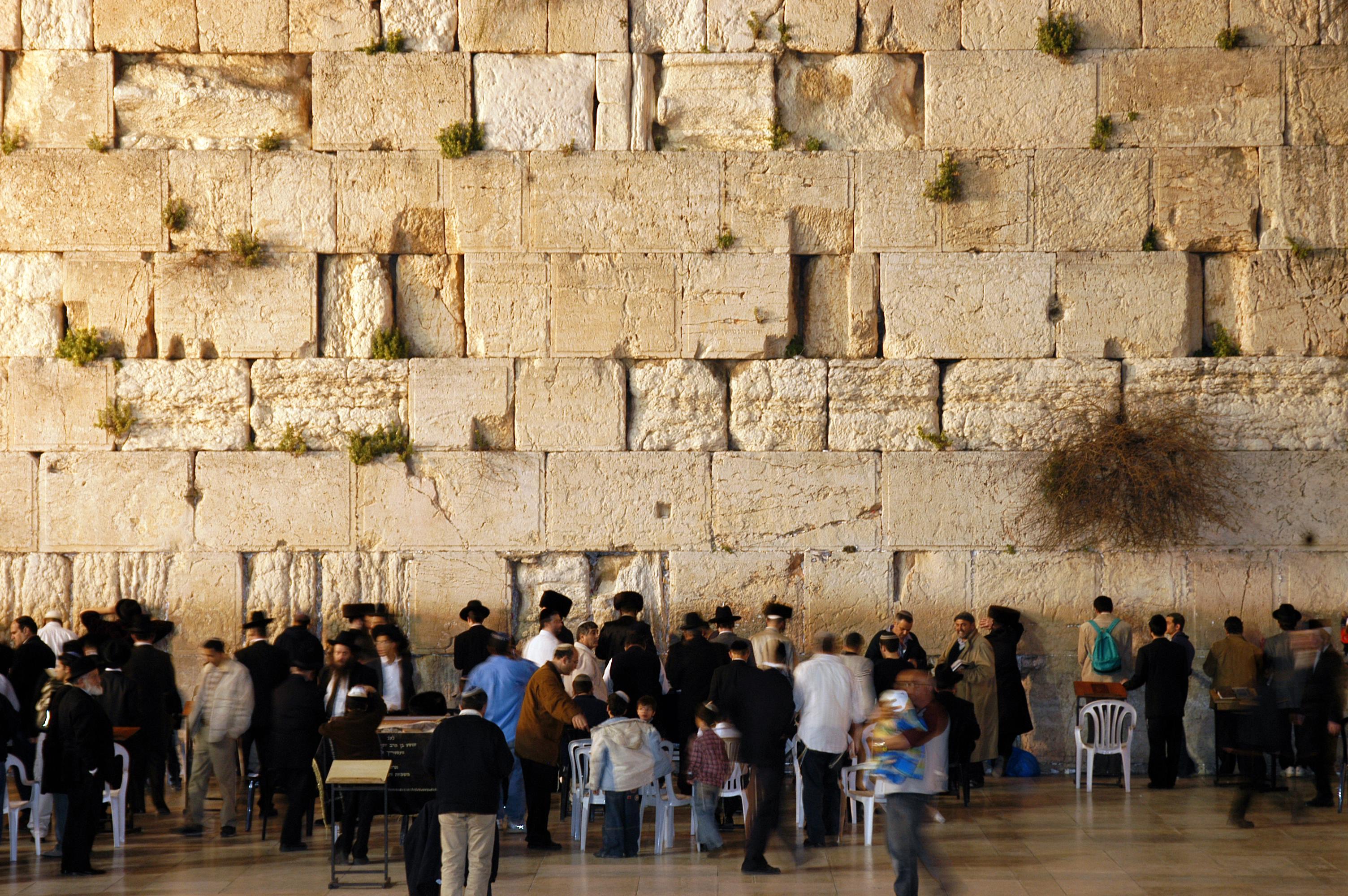
The Third Temple presents a fundamental fault line in Jewish eschatology. The Zohar (Parshat Pinchas 146–148) describes a Temple that “descends from the heavenly firmaments”—already built in the celestial realm, manifesting when tikkun is complete. Maimonides reads it as a concrete legal obligation. The Temple Institute has reconstructed over seventy ritual vessels and treats it as an engineering and political project.10
THE RED HEIFER
Numbers 19 prescribes ten requirements for the parah adumah (פָּרָה אֲדֻמָּה): entirely red, without blemish, no more than two non-red hairs, upon which a yoke has never come. Its ashes, mixed with water, constitute the only means of purification from corpse-impurity—without which Temple service cannot resume.11
Five red heifer candidates were transported from Jerome Urbanosky’s ranch in Texas to Israel by Byron Stinson’s Boneh Israel organization in September 2022. The Temple Institute announced in August 2025 that all five had been disqualified. Hamas explicitly cited the red heifer program as a casus belli. Heritage Minister Amihai Ben-Eliyahu visited a red heifer farm in February 2026.12
“When expectation becomes engineering, the prophecy manufactures its own fulfillment.
FROM PROPHECY TO PROCEDURE
The most consequential eschatological development in the current war is the shift from prophetic mode—passive expectation—to procedural mode: active engineering.
| Mode | Character | Ancient Precedent | Current Example |
|---|---|---|---|
| Prophetic | Wait for God to act | Daniel’s visions | Quietist Haredi theology |
| Procedural | Build the apparatus | 1QM War Scroll (serekh) | Temple Institute, CUFI, red heifer program |
John Nelson Darby originated dispensational premillennialism in the 1830s. C.I. Scofield popularized it through the Scofield Reference Bible (1909). The pretribulation Rapture has no patristic precedent—it emerged from 19th-century British prophecy conferences.13
John Hagee founded Christians United for Israel (CUFI) in 2006. It has grown to over ten million members—the largest pro-Israel organization in America, dwarfing AIPAC. Dispensationalist theology requires the State of Israel to exist and expand for prophecy to be fulfilled. This creates a theological imperative to support Israeli territorial maximalism—not out of concern for Jewish welfare, but as a prerequisite for the Rapture sequence.14 De-escalation is theologically unwelcome because it slows the eschatological timeline.
The Blackstone Memorial of 1891—signed by J.P. Morgan, John D. Rockefeller, Chief Justice Melville Fuller, and the editors of major newspapers—petitioned President Harrison to “give Palestine back to them.” This predates Herzl’s Der Judenstaat (1896) by five years. Christian Zionism preceded Jewish political Zionism.15
Isaiah 66:1 provides the internal biblical critique: “The heaven is My throne and the earth is My footstool. Where is the house that you would build for Me?”16 The Zohar insists the Third Temple descends from heaven. Isaiah says God cannot be housed. Both reject the idea that human construction can contain the divine. The procedural mode ignores them both.
SOURCES
- Daniel 8:20 (Sefaria). Collins, J.J. Daniel, Hermeneia commentary (Fortress, 1993).
- Ezekiel 38:5 (Sefaria). Riddlebarger, K. A Case for Amillennialism (Baker Academic, 2003).
- Daniel 9:27 (Sefaria). Mark 13:14, Matthew 24:15. The historical referent is Antiochus IV Epiphanes, 167 BCE.
- 1QM Column 1, Qumran Digital Lexicon. Sukenik, E. (first publication, 1955, posthumous).
- Yadin, Y. The Scroll of the War of the Sons of Light Against the Sons of Darkness (Oxford UP, 1962). Israel Museum catalogue description.
- Revelation 18:11–13, Bible Hub Interlinear. σωμάτων (somaton) = slave-market commodity term.
- Bauckham, R. The Theology of the Book of Revelation (Cambridge UP, 1993). Cf. Ezekiel 27 (Tyre oracle).
- Etz Chaim (Tree of Life), Gate 1, Ch. 1. Fine, L. “Kabbalistic Texts,” My Jewish Learning. Drob, S. Symbols of the Kabbalah (Jason Aronson, 2000).
- Zohar, Bereshit B, Ch. 13 (Qlippot as “nutshell” for holiness). Tanya, Ch. 6 (three impure husks + kelipat nogah).
- Zohar Parshat Pinchas 146–148. Maimonides, Mishneh Torah, Hilkhot Beit Ha-Bechirah. Temple Institute (templeinstitute.org): 70+ reconstructed vessels.
- Numbers 19 (Sefaria). Ten requirements per rabbinic elaboration (Mishnah Parah 2:5).
- Temple Institute, “All Texas Red Heifers Disqualified” (August 6, 2025). Roya News, Ben-Eliyahu farm visit (February 2026).
- Darby, J.N. Synopsis of the Books of the Bible (1857–62). Scofield, C.I. Scofield Reference Bible (1909). Gentry, K. Before Jerusalem Fell (1989).
- Hagee, J. Founding of CUFI (2006). Michaelson, J. “Hagee’s eschatology requires the destruction of most of Israel,” The Forward (April 2024).
- Blackstone Memorial (1891), full text at Wikisource. Predates Herzl, Der Judenstaat (1896).
- Isaiah 66:1 (Sefaria). Gordon, C.H. Ugarit and Caphtor, p. 127 (hdm = “footstool,” Caphtorian loanword).