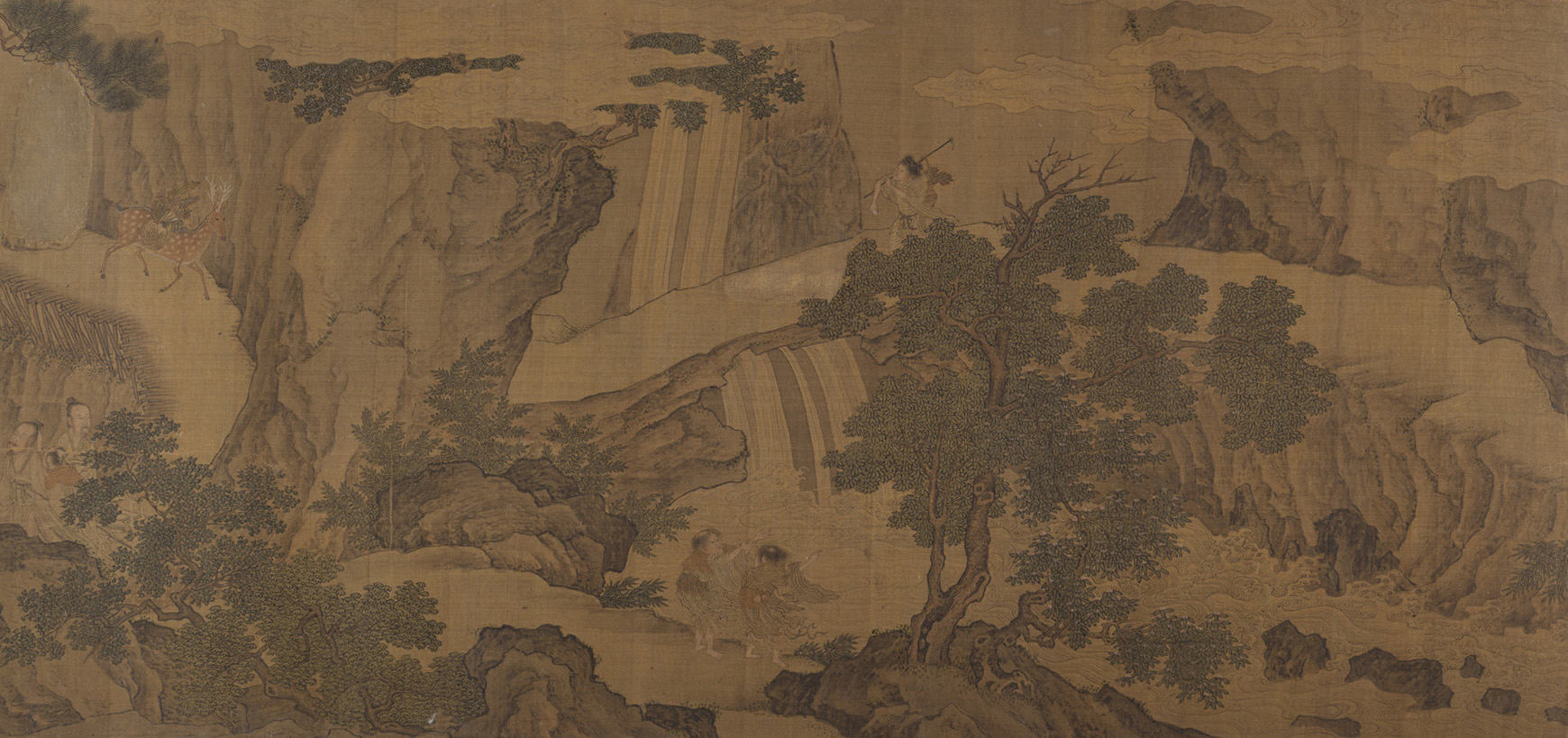
In 184 CE, a Daoist healer named Zhang Jue declared the cosmic order dead and launched the largest millenarian uprising in Chinese history. His followers wore yellow turbans, and his slogan—“The Azure Heaven is dead; the Yellow Heaven shall rise”—was a proclamation of cosmic regime change, timed to the first year of the sixty-year calendrical cycle. The Han dynasty never recovered.
This is not an isolated incident. It is the central pattern of Chinese civilizational history. Daoism and Confucianism—the two great indigenous traditions of China—form a dialectic that has produced more regime changes, more millenarian uprisings, and more end-times violence than any other pair of traditions on earth. Confucianism claims to embody cosmic harmony through proper governance. Daoism declares when that claim has failed. The Mandate of Heaven is the mechanism: every dynastic fall is a Chinese apocalypse, and every new dynasty is a new creation.
In 2026, as Iran burns and the United States projects force across the Middle East, China exercises what multiple analysts have called “strategic silence.” The Daoist-Confucian substrate may explain why: the tradition teaches that the adversary who exhausts himself against the resistance of reality does not need to be fought. He collapses under the weight of his own overextension. Wu-wei—non-forcing—is not passivity. It is the most patient form of strategy.
ORIGINS: TWO RESPONSES TO ONE COSMOS
Confucius (Kong Qiu, 551–479 BCE) articulated the ethical framework: humanity achieves harmony with Heaven through moral cultivation, proper ritual, and hierarchical social order. The junzi (gentleman/exemplary person) aligns his conduct with li (ritual propriety) and ren (humaneness). When rulers govern well, Heaven bestows its Mandate (tianming, 天命). When they do not, portents appear—earthquakes, eclipses, floods—and the Mandate withdraws. This is not metaphor. It is the operating system of Chinese political theology for three thousand years.1
The Daodejing, attributed to Laozi (traditionally 6th century BCE, though the text likely reached its current form in the 4th–3rd centuries BCE), offers a radically different response to the same cosmological framework. Where Confucianism cultivates order, Daoism cultivates emptiness. Chapter 16: “Attain the utmost emptiness; hold firm to stillness. The ten thousand things arise together; I watch their return.”2 The Dao does not command. It flows. It does not rule. It underlies.
Both traditions rest on an older substrate. Nüwa (女媧), the serpent-bodied creator goddess who fashioned humanity from clay and repaired the broken pillar of Heaven, predates both Confucius and Laozi. The Chinese dragon (龍)—whose character derives from a serpent pictograph on Shang dynasty oracle bones—was never demonized. Where other civilizations turned the serpent into a monster, China enshrined it as the cosmic force mediating between Heaven and Earth: the bringer of rain, the lord of rivers, the emblem of the sage-ruler.
Every educated Chinese person until the 20th century participated in both traditions simultaneously—Confucian in governance, Daoist in contemplation, Buddhist at funerals. The tensions between them were not sectarian wars but a continuous philosophical conversation, periodically erupting into millenarian violence when the Confucian order failed and Daoist or syncretic millenarian movements filled the vacuum.
CORE BELIEFS: THE MANDATE AND THE DAO
The Mandate of Heaven (天命) is a rolling apocalypse. Unlike the Abrahamic traditions, which posit a single final judgment, the Chinese framework produces a recurring end of the world with each dynastic collapse. Heaven is not a personal god—it is the moral structure of the cosmos itself. When a ruler’s virtue fails, natural disasters multiply, the economy collapses, and rebellion becomes legitimate. The interregnum between dynasties is the Chinese eschaton—civil war, famine, population collapse, the dissolution of social bonds. Then a new sage-ruler arises, receives the Mandate, and order is restored.3
Yanming An (Dao, 2021) describes this as a “chain of recurring links” model of cyclicality—fundamentally distinct from both Indo-Hellenic Great Year cycles and Western teleological eschatology. No final state is permanent. The I Ching encodes this in its last two hexagrams: Hexagram 63 (Ji Ji, “After Completion”) is followed by Hexagram 64 (Wei Ji, “Before Completion”). Completion gives way to new beginning. The book ends with incompletion.4
The Five Elements (五行, wuxing) provided the cosmological clock. Zou Yan (305–240 BCE) mapped dynastic succession onto elemental conquest: Earth → Wood → Metal → Fire → Water → Earth. Each dynasty was assigned an element; the successor’s element “conquers” the predecessor. This embedded an eschatological mechanism in the structure of Chinese political cosmology—every regime change was not merely political but cosmic.5
Wu-wei (無為, “non-forcing”) is the Daoist ethical principle: achieving outcomes through alignment with the natural order rather than through coercive force. Sun Tzu’s Art of War III.2: “Supreme excellence consists in subduing the enemy without fighting.” This is the strategic formulation of a metaphysical claim—the Dao operates through yielding, not through domination.
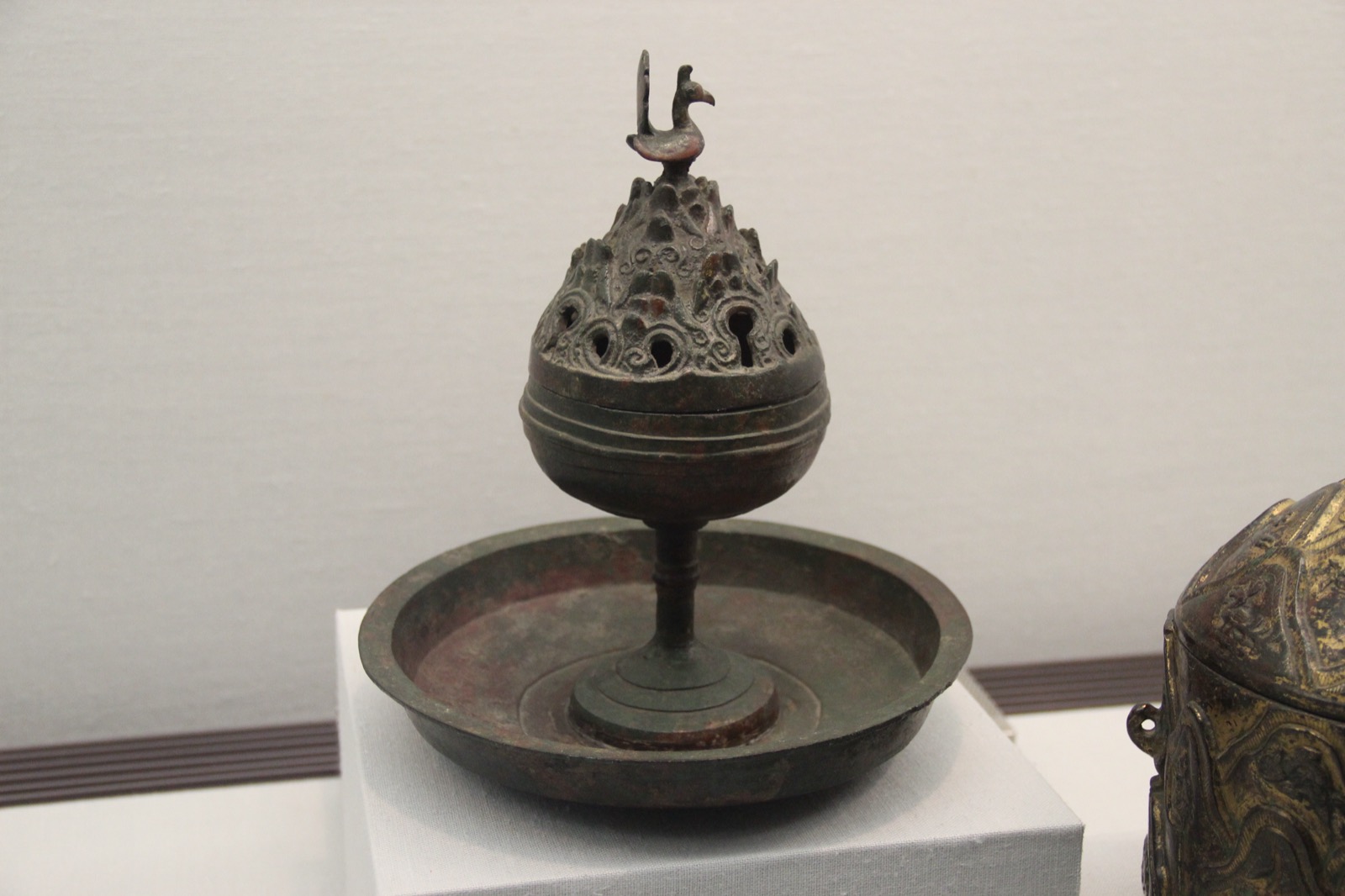
YELLOW TURBAN REBELLION, 184 CE
'The Azure Heaven is dead; the Yellow Heaven shall rise'
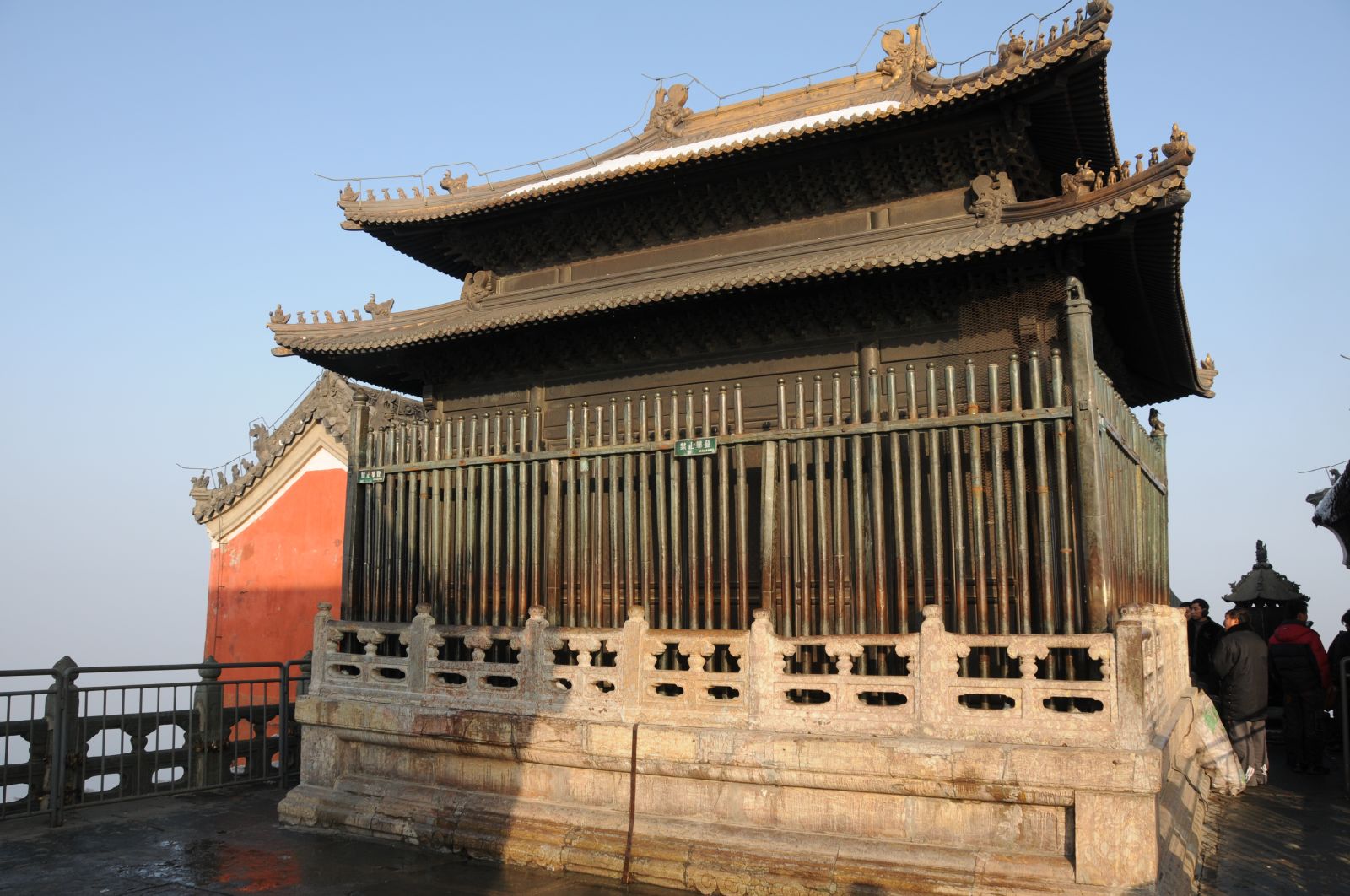
DAOIST TEMPLE
Where the Dao is studied through the heart
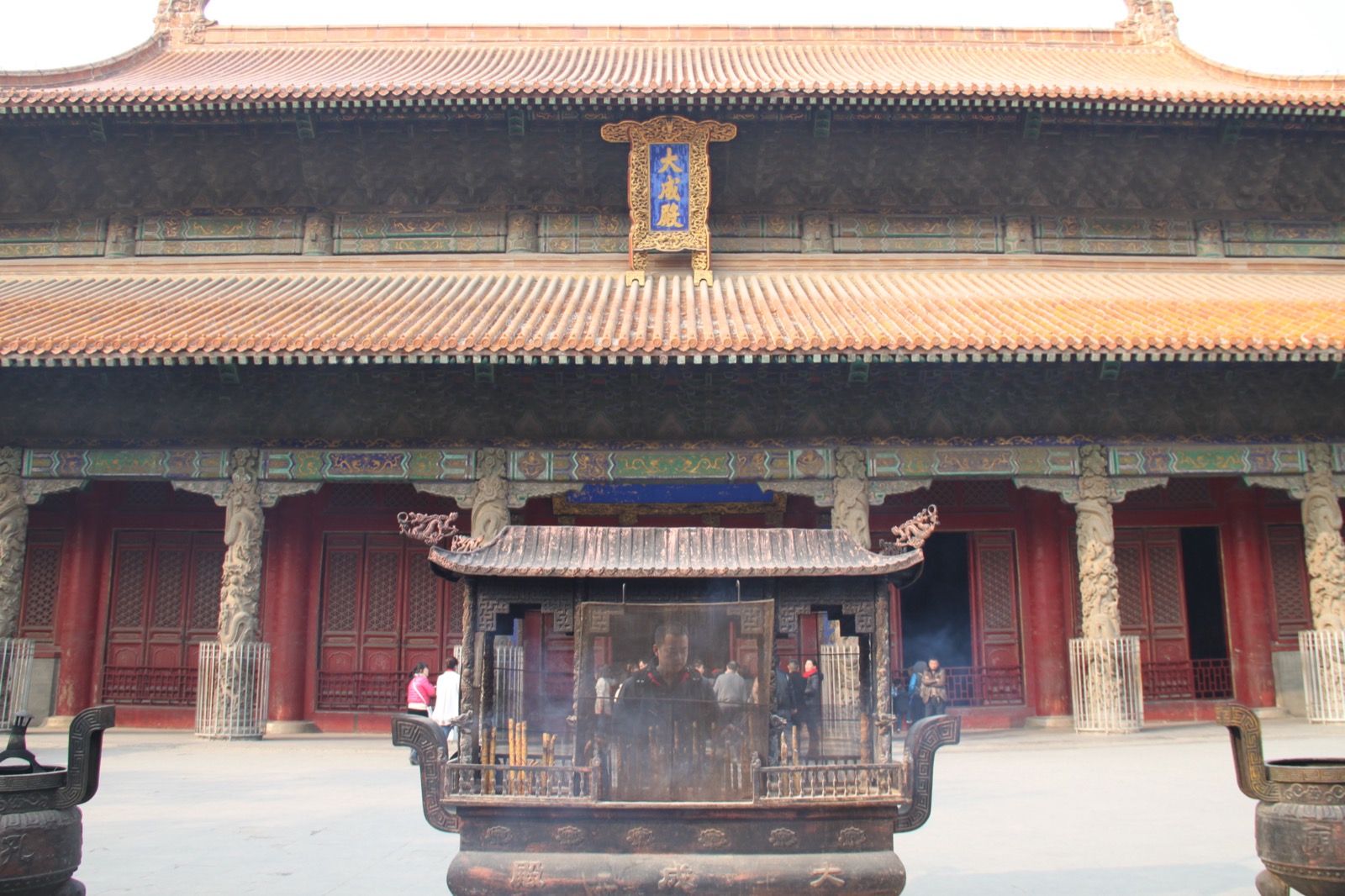
CONFUCIAN TEMPLE
Where the Mandate of Heaven is maintained through rites
SACRED TEXTS
The Daodejing (道德經). Eighty-one chapters attributed to Laozi. The philosophical foundation. Chapter 25: “There was something formless and complete, born before heaven and earth. Silent, vast, standing alone and unchanging, moving in cycles without exhaustion. It may be regarded as the mother of all under heaven.” Chapter 40: “Returning is the motion of the Dao. Weakness is the function of the Dao.”2 This is not apocalypse. It is cosmological breathing—manifestation and dissolution as a natural rhythm.
The Taiping Jing (太平經, Scripture of Great Peace). The foundational Daoist eschatological text, composed c. 2nd century CE. Barbara Hendrischke (UC Press, 2006) is the definitive study. The text envisions cosmic crisis caused by chengfu (承負, “inherited guilt”)—accumulated ancestral sin generating cosmic imbalance. The remedy: moral cultivation that generates the qi of Great Peace. “If all over the world people recite and read well-adjusted texts, pneuma of great peace arises.”6
The Confucian Canon. The Four Books (Analects, Mencius, Great Learning, Doctrine of the Mean) and Five Classics (I Ching, Book of Documents, Book of Songs, Book of Rites, Spring and Autumn Annals). The Liyun chapter of the Book of Rites describes the lost golden age of Datong: “When the Great Way prevailed, the world was shared by all (天下為公). They chose men of talents, virtue, and ability.”7 The Gongyang Commentary on the Spring and Autumn Annals proposes three progressive epochs: the Age of Disorder, the Age of Ascending Peace, and the Age of Universal Peace—a Confucian eschatological timeline.
The Zhongyong (中庸, Doctrine of the Mean). Its opening line is the foundational formula linking Heaven to human nature: “What Heaven has conferred is called Nature; accordance with this nature is called the Way; the cultivation of this Way is called Education.”8 The fully sincere person can “form a triad with Heaven and Earth”—participating in cosmic creation and renewal. This is the Confucian path to eschatological harmony: not waiting for a savior but becoming the moral agent who restores the Mandate.
THE MANDATE AND THE SEED PEOPLE
Li Hong (李弘) is the Daoist messianic figure—an incarnation of Laozi prophesied to appear at the end of world cycles. Anna Seidel (History of Religions, 1969) established the foundational scholarship: Li Hong rescues the zhongmin (種民, “Seed People”), the morally and spiritually elect who survive the cosmic transition. He vanquishes demonic forces and inaugurates an era of Taiping. The Tang imperial house, surnamed Li, exploited the prophecy by claiming Laozi as their ancestor—the political exploitation of eschatological expectation.9
The Yellow Turban Rebellion (184 CE) was the first large-scale Daoist eschatological uprising. Zhang Jue founded the Way of Great Peace (太平道) and declared: “The Azure Heaven is dead; the Yellow Heaven shall rise. In the year of jiazi, great fortune to all under heaven.” The “Azure Heaven” was the Han dynasty; the “Yellow Heaven” was the new cosmic age. Hundreds of thousands joined. The jiazi year—first of the sixty-year cycle—was the calendrical apocalypse.10
In Chinese history, the declaration that the cosmic cycle has reached its nadir is simultaneously a declaration of political illegitimacy. The rebellion is the end-times vision made real.
In Chinese popular religion, Li Hong and the Buddhist Maitreya merged into a single messianic expectation. The Red Turban Rebellion (1351–1368) invoked both—overthrowing the Yuan Dynasty under joint Maitreya/Li Hong banners and founding the Ming Dynasty. A messianic Buddhist-Daoist movement toppled an empire. The Ming Dynasty, born of millenarian revolt, became the most Confucian state in Chinese history—the dialectic completing its cycle.11
The Taiping Rebellion (1850–1864) was the bloodiest manifestation: Hong Xiuquan, a failed examination candidate who claimed to be Jesus Christ’s younger brother, fused Christian salvation theology with the Daoist concept of Taiping. Twenty to thirty million dead. Jonathan Spence (God’s Chinese Son, 1996) traced the syncretic theology; Dong Ning (Journal of Chinese Theology, Brill, 2024) analyzed Hong’s mystical foundations.12 Falun Gong (1992–present) recapitulates the pattern: Li Hongzhi’s Fa-rectification (正法) doctrine declares an eschatological event in progress. The CCP’s suppression mirrors every dynasty’s response to millenarian threats since the Yellow Turbans.
“The Azure Heaven is dead; the Yellow Heaven shall rise.— Zhang Jue (張角), 184 CE
CONTEMPORARY SIGNAL
Jacob Mardell (Sinification, March 8, 2026) documented Chinese commentators recommending “active neutrality”—a phrase that is itself a paradox explicable only through wu-wei. Kyle Chan (Foreign Affairs, February 27, 2026) titled his analysis “China Is Winning by Waiting.” John Calabrese (The Conversation, March 6, 2026): “China has perfected the role of concerned onlooker.”13
The Daoist reading: wu-wei is not inaction but non-forcing. The adversary exhausts himself against the resistance of reality. Sun Tzu’s “supreme excellence consists in subduing the enemy without fighting” is the strategic formulation of the Daodejing’s chapter 40: “Weakness is the function of the Dao.”
The Confucian reading: if America’s role as global hegemon is losing its Mandate—overextension, domestic crisis, infrastructure degradation—then in Chinese cosmological terms, the portents are appearing. Xi Jinping’s “Chinese Dream” (中国梦) centers on “national rejuvenation” (民族復興)—literally the restoration of a lost civilizational golden age. This is structurally eschatological: the Century of Humiliation (1839–1949) gives way to restored greatness. The “Community of Common Destiny” (人類命運共同體) is the Datong ideal secularized as foreign policy.14
The question the Daoist-Confucian framework asks is not who wins the war. The question is who will have the Mandate when it ends. The tradition that produced the Taiping Jing, the Yellow Turbans, and the Ming Dynasty knows: the new order always rises from the ruins of the old. The only question is whether the transition is conscious—achieved through moral cultivation and alignment with the Dao—or blind, achieved through the exhaustion of force. The Azure Heaven is dead. What rises next depends on who has been preparing.
SOURCES
- Luo, X. & Pines, Y. “The Elusive Mandate of Heaven.” T’oung Pao 109.1-2 (2023): 1–47. Jun Zhang, “The Mandate of Heaven,” Religions 17.2 (2026).
- Daodejing (道德經), chs. 16, 25, 40. Henricks, R.G. Lao Tzu: Te-Tao Ching (Ballantine, 1989). Ivanhoe, P.J. The Daodejing of Laozi (Hackett, 2003).
- Shu Jing (Book of Documents), “The Instructions of Yi.” Yanming An, “The Idea of Cyclicality in Chinese Thought,” Dao 20 (2021): 389–406.
- SJ Marshall, The Mandate of Heaven: Hidden History in the Book of Changes (Routledge, 2001). Hexagram 63 (Ji Ji) → 64 (Wei Ji).
- Zou Yan (305–240 BCE). Lu shi chunqiu (3rd c. BCE). Kirkland, R. “The I Ching, Yin-Yang, and the Five Forces” (U. Georgia, 1998).
- Hendrischke, B. The Scripture on Great Peace: The Taiping Jing and the Beginnings of Daoism (UC Press, 2006). Espesset, G. “Latter Han religious mass movements,” in Early Chinese Religion (Brill, 2009): 1061–1102.
- Liji (禮記), Liyun chapter. Chen, A.H.Y. “The Concept of ‘Datong’ in Chinese Philosophy” (HKU, 2011). Kang Youwei, Datong Shu (1902).
- Zhongyong (中庸), opening. Gongyang Commentary: Three Ages (Disorder → Ascending Peace → Universal Peace).
- Seidel, A. “The Image of the Perfect Ruler in Early Taoist Messianism.” History of Religions 9.2-3 (1969-70): 216–247. Bokenkamp, S. Early Daoist Scriptures (UC Press, 1997).
- De Crespigny, R. A Biographical Dictionary of Later Han to the Three Kingdoms (Brill, 2007). Kleeman, T. Celestial Masters (Harvard-Yenching, 2016).
- Ter Haar, B. The White Lotus Teachings in Chinese Religious History (Brill, 1992). Zurcher, E. “‘Prince Moonlight’: Messianism and Eschatology” (Brill, 2013).
- Spence, J. God’s Chinese Son (Norton, 1996). Dong Ning, “Hong Xiuquan’s Mysticism,” J. Chinese Theology 9.2 (Brill, 2024). Chang, M.H. Falun Gong: The End of Days (Yale, 2004).
- Mardell, J. “Active Neutrality in the Middle East.” Sinification (March 8, 2026). Calabrese, J. The Conversation (March 6, 2026). SCMP, “Why China’s strategy to stay out of Iran war is working” (March 25, 2026).
- Zhang Weiwei, The China Wave: Rise of a Civilizational State (2011). Zheng Wang, “The Chinese Dream,” J. Chinese Political Science (2013). Jacques, M. When China Rules the World (Penguin, 2009).